

Why BioLizard’s BioVerse Navigator Caught My Attention
Recently, I read that Biolizard’s platform, Bioverse Navigator, won Bioinformatics Innovation of the Year at the 2025 Biotech Breakthrough Awards, and it made me curious. Bioinformatics tools get released all the time, but awards for such tools are not as common. So I started to look into what Bioverse Navigator actually does, why it stood out, and what it really changes.
As I looked into it more, it was interesting for me to see that it was not that they created a new algorithm or that they discovered a new gene. They were fixing something more basic but also more frustrating. Biology is becoming more and more of a data-heavy science, and a lot of researchers are struggling not with collecting the data, but with organizing it, maintaining it, and making sense of it in a timely fashion.
Biology is Generating More Data Than it Can Easily Handle
Modern biology does not produce small datasets anymore. A single human genome contains about 3 billion DNA base pairs, and sequencing technologies read these base pairs multiple times to reduce error, which makes the data files grow even larger. Gene expression experiments add another layer, since researchers measure activity across more than 20,000 genes at once, often across many samples. When proteomics, metabolomics, imaging data, and patient health records are included, the amount of data becomes overwhelming very quickly.
Scientists have been warning about this for years. A well known paper published in PLOS Biology predicted that by 2025, genomic data storage alone could reach between 2 and 40 exabytes, depending on how fast sequencing technology advances. One exabyte equals one billion gigabytes. The authors even compared genomics to platforms like YouTube in terms of data demand, which sounds dramatic but actually helps explain the scale of the problem
At this point, scientists do not struggle to generate data. They struggle to store it, process it, and actually understand what it is telling them.
Data Silos Make The Problem Worse
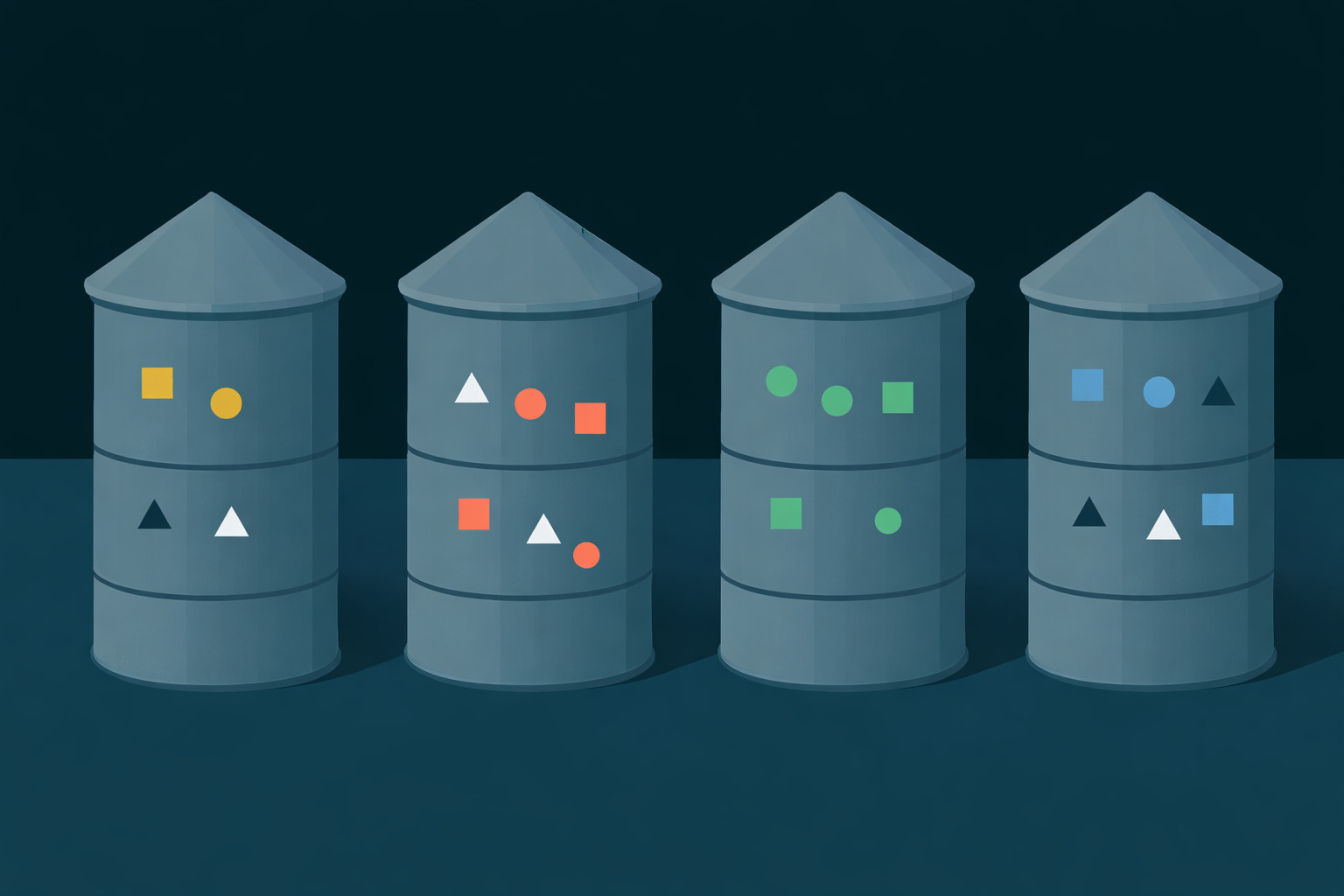
Through research and projects, I’ve learned that the size of data and data storage is not the only issue. The way the data is stored and managed also causes problems. In most research, different types of data live in different places. DNA sequencing data might be stored in one system, RNA expression results in another system, protein data in another, and clinical outcomes somewhere else entirely.
And different teams often manage each part, which makes it very hard to connect everything later. Sometimes these teams are on different continents altogether. These data silos slow down analysis and collaboration. Even when all the data exists, combining it can take months. Sometimes researchers spend more time organizing the files, making sure they have the right versions, than actually doing the research and answering scientific questions.
These silos have created barriers that reduce the effectiveness of the analysis. This is exactly where tools like Bioverse Navigator start to make sense. The issue is not that scientists lack tools. The issue is that these tools do not work across the scale and the silos.
What BioVerse Navigator is designed to do
Bioverse Navigator was launched in December 2024, and it was described as a visual analytics platform that helps researchers explore complex biomedical data in a single environment. Now, instead of moving between different programs and silos and constantly exporting files, researchers can load different data types into one workspace and explore them together.
The big pitch with Bioverse Navigator was that it uses a unified data environment supported by a data orchestration layer. In simple terms, the platform keeps all data organized, connected, and traceable, which is very important so researchers can trust what they are looking at. Biolizard also described the platform as AI-native, meaning machine learning tools are built into the workflows instead of needing additional work.
Ultimately, Bioverse navigator isn’t just for faster analysis but also clearer analysis
How Researchers actually use the Platform
According to Biolizard, this platform focuses on making analysis and visualization coexist together. Researchers can explore patterns in the data visually while running advanced analytics in the same environment. This is great because it allows them to test ideas and see results quickly instead of waiting for long processing steps and then trying to interpret results afterward.
This platform also reduces the barrier for any researcher who does not have a strong programming background. Not every biologist needs to be a data scientist, and not every clinician needs to learn how to code. This tool allows direct interaction with data and can change who gets to ask questions and participate in analysis. I think that’s pretty important because now curiosity gets answered much faster.
Medical research examples that show real impact
The most convincing part of BioVerse Navigator is how it has been used in medical research and development.
Bioverse Navigator’s site published a few case studies that I found interesting:
Prostate cancer research
In one project focused on prostate cancer, Biolizard reports that the analysis identified 187 genes strongly associated with prostate cancer, many of which were not previously well known for their connection to the disease. Now, these genes may not immediately lead to new treatments, but the fact that it narrows down potential targets from a massive data set and speeds up the process for researchers so they can focus their time and effort more effectively is a massive win.
Diagnostics and biomarker panels
Biolizard worked with MDxHealth to develop cancer diagnostics. In this collaborative project, Biolizard built a machine-learning-based risk scoring model using biomarker panels and improved quality control processes for laboratory assays. This type of work is less exciting than gene discovery, but diagnostics depend heavily on consistency and reliability. Improving these workflows and making them more efficient reduces time waste and creates a real impact on patient care.
Predicting transplant rejection
Another case involved predicting kidney transplant rejection using RNA sequencing data combined with clinical variables. Biolizard developed predictive models for early acute rejection and subclinical rejection. This example is a great case study in why integration of data matters, because neither molecular data nor clinical data alone tells the full story. In their platform, they could combine the data and help doctors intervene earlier and tailor treatment more precisely.
My perspective
What interests me is that this innovation was not a single breakthrough algorithm. It was a platform approach to unifying complex data and making analysis more accessible, efficient, and fast. Biological datasets are growing really fast. These tools help researchers stay organized, move faster, and be more efficient. They focus their energy on solving problems and asking the right questions versus dealing with the inefficiencies of organizing and trusting the data.
This research also acknowledges the fact that scientists and researchers spend a lot of time managing data instead of analyzing it. By reducing friction, they can move faster.
At the same time, I think it is important to stay cautious. Visual dashboards can make results look convincing even when they need more validation. Biology is not going to stop generating data. Tools like this show that the future of bioinformatics is not just in gene discovery and smarter algorithms, it is also in building smarter systems that researchers and scientists